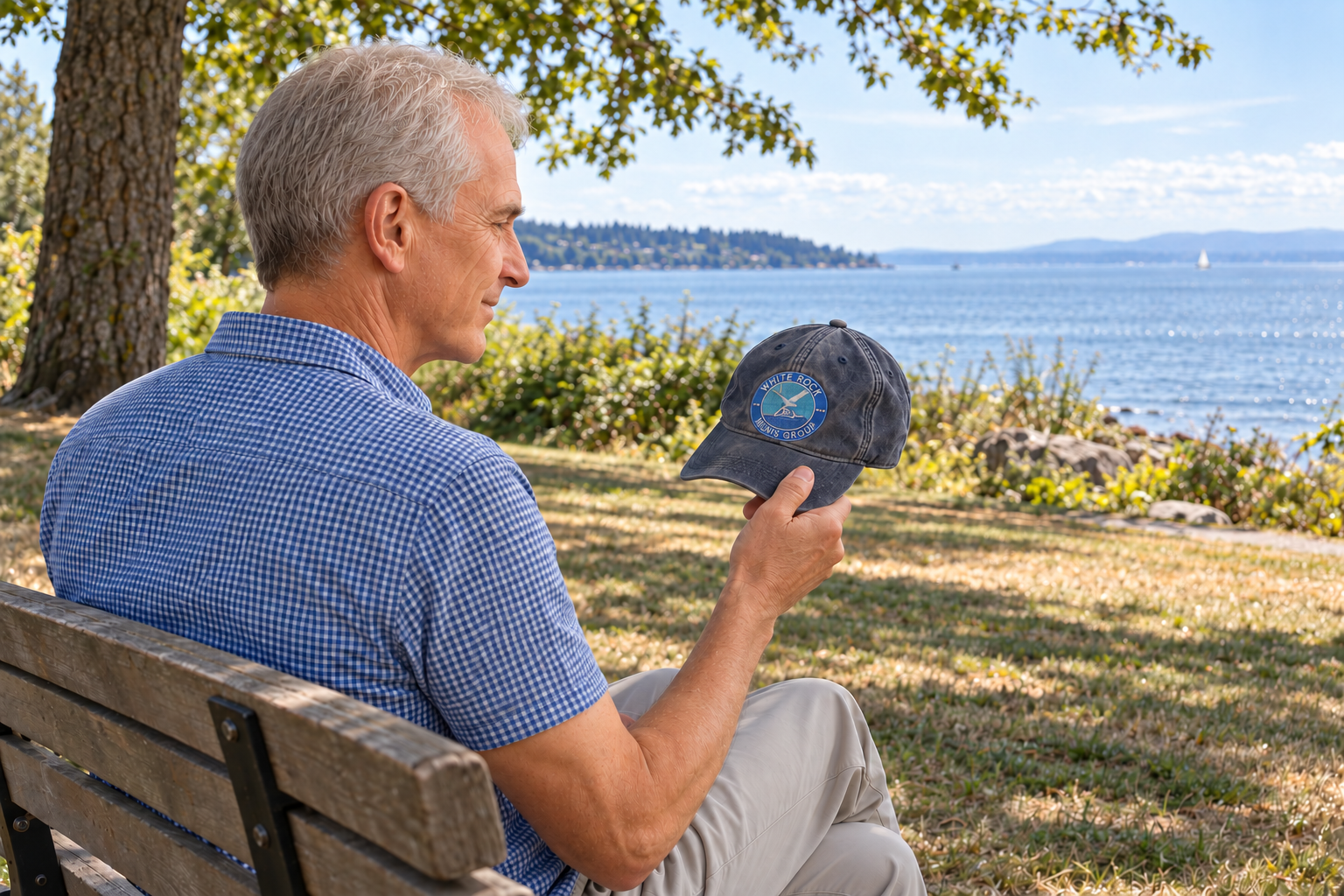
On October 20 last year, I created a Facebook group and posted an invitation for local men to meet for coffee.
I’d spent the previous year missing the regular connection I had through work. For decades, I was around people every day. I didn’t miss the pace of that life, but I missed the familiar faces and conversations that came with it.
My wife had joined a women’s group in our community, and I could see how much she enjoyed it. I wondered whether men in the area might want something similar. I decided to find out.
Eleven days later, on October 31, 24 men gathered at 10 a.m. for the first meeting of the White Rock Men’s Group. Some of the men I met that morning have become friends I look forward to seeing each week.
No strings, no commitment. Drop in, have a coffee, and see how it feels.
As we approach our first anniversary, WRMG has 349 members. About 50 have become regular participants, and we’ve hosted more than 200 events, including Monday and Friday coffee, Wednesday walks, Thursday e-bike rides, and dinners twice a month.
I still have trouble believing those numbers. I had no idea what might grow from one Facebook post. The events matter, but what stays with me is seeing men recognize one another, make plans, and come back the following week.
In Issue No. 13, “See You Monday,” I wrote about the friendships forming within the group. That was what I had hoped for.
Lately, though, I’ve been wondering what those connections might mean beyond the men who come to our events.
A story one of our members recently shared on the group page brought that question into focus.
Don was walking home from the gym when a man about his age asked for directions.
His name was Frank. He was looking for a school with tall trees nearby, where children rode their bikes through some sort of course. Don thought he knew the place, so they walked there together.
It was the wrong school.
As they talked, Frank told Don he had dementia. Gradually, Don understood that Frank was trying to get home. Frank had a place in mind, but the directions he was giving Don weren’t getting them there.
Don offered to drive him and help him find his house. Frank hesitated. He didn’t want to impose.
Eventually, he agreed. On the way to get Don’s car, Don asked whether Frank had a wallet. He did, and inside was his address. His home was seven kilometres away.
During the drive, Frank worried about how upset his wife would be. He had become lost again.
Afterward, Don wondered how many people Frank might have asked for help before they met, and what might have happened if no one had stayed with him long enough to understand.
When I read the story, I thought how fortunate Frank was that Don was there. Then came a thought I couldn’t shake:
I have someone in my family with dementia who can no longer make themselves understood. Frank knew he needed to get home, but he was struggling to explain where he lived. The thought that I might one day be in that position sits heavy with me.
I kept thinking about how easy it would have been to answer the question Frank seemed to be asking. Don could have pointed toward the school and carried on. He could even have walked there with him, found it was the wrong place, and decided he had done what he could.
That’s the part that makes me uncomfortable. I can picture myself doing either of those things and believing I had helped. I don’t know whether I would have noticed that Frank needed me to keep asking questions.
Don did notice. He stayed with Frank until he understood enough to get him home.
I started WRMG because I wanted connection for myself. A year later, those familiar faces and conversations have become a part of my life that I truly appreciate and enjoy.
But Don’s story showed me what can happen when men bring their experiences back to the group. One person tells a story, and the rest of us go away seeing something a little differently.
I’d like there to be room for more of those conversations in our second year: stories about times we helped someone, times we hesitated, and times we needed help ourselves. Don’s story has made me want to listen a little longer before assuming I understand.
Don would have helped Frank whether WRMG existed or not. But he chose to tell the rest of us what happened.
Last October, I wondered whether anyone would show up for coffee.
Jim O’Grady writes The Post Game, a newsletter about life in the GoGo years. He lives in White Rock, BC.